More strength, fewer parts, less weight
High-strength automotive aluminium sheet: strength after forming, reliable joining and improved sustainability, validated on real structural parts via cold forming, superplastic forming (SPF) and hot forming (HFQ).
Description
Automotive lightweighting demands strength after forming without giving up freedom of design, while body structures must survive crash loads and stay weldable and bondable. AMAG CrossAlloy.57 aims at merging the formability of 5xxx alloys with the strength of 7xxx alloys in a single sheet material, enabling thinner walls, fewer parts and lower weight.
The alloy has been validated on real structural components across three forming routes: cold forming, superplastic forming (SPF) and hot-form quenching (HFQ). Mechanical behavior, formability, corrosion and simulation results are given per route in the tabs below; weight-saving figures are based on partner feasibility and crush simulations.
Chemical Composition
The performance rests on the crossover chemistry: a high-magnesium 5xxx base made age-hardenable, hardening via the T-phase instead of the η-phase. Current internal specification limits and typical measured values are shown below.
| wt-% | Si | Fe | Cu | Mn | Mg | Zn | Cr | Ti | Zr |
|---|---|---|---|---|---|---|---|---|---|
| Min | – | – | 0.40 | 0.20 | 4.30 | 3.20 | – | – | – |
| Max | 0.40 | 0.40 | 0.70 | 0.45 | 4.90 | 3.60 | 0.20 | 0.15 | 0.10 |
| Typical | 0.15 | 0.21 | 0.50 | 0.32 | 4.65 | 3.43 | 0.06 | 0.02 | < 0.01 |
Remainder Al; other elements ≤ 0.10 each / ≤ 0.20 total.
Room-temperature stamping of thin body-in-white sheet. Best suited to moderately complex structural parts where sufficient ductility during forming and high strength after the paint-bake both matter. CrossAlloy.57 forms like a moderate-strength formable alloy yet significantly hardens on baking, so panels can be thinner or fewer.
The advantage: Cold forming
- High strength after paint-bake : Rp0.2 reaches up to 400 MPa in the OEM paint-bake cycle (T64).
- Formable in the delivery condition : Sufficient ductility and bendability in T4-FH for stamped parts with low to medium complexity.
- Strong bonding & joining : Adhesive bond strength +20 % vs. 6016 and 5182; weldability similar to 5xxx alloys.
Mechanical Behavior
Even in the soft delivery condition (T4-FH) CrossAlloy.57 is far stronger than typical cold-forming sheet such as outer-panel 6016-T4 (~120 MPa Rp0.2) and 5182-O (~130 MPa). After paint-bake simulation it reaches Rp0.2 values up to 400 MPa (T64).
Typical values are shown below; establishing customer specifications is feasible upon request.
Strip / sheet 1.0 – < 3.2 mm
| Property | T4-FH1) | T642) |
|---|---|---|
| Rp0.2 (MPa) | 260–310 | 350–400 |
| Rm (MPa) | 430–470 | 440–490 |
| Ag (%) | 14–21 | 7–12 |
| A (%) | 18–23 | 10–14 |
| n (n₅) | 0.19–0.22 | – |
| r (r₁₀) | 0.55–0.85 | – |
1) FH: Pre-treated after solutionizing and quenching to ensure optimal grain structure, limited natural aging and fast hardening during subsequent aging
2) Typical automotive test condition: 2 % pre-deformation and subsequent aging at 185 °C for 20 min.
Reference alloys in the field for comparison:
| Property | 6016 (T4) | 6016 (T6) | 5182 (O) | 6082 (T6) |
|---|---|---|---|---|
| Rp0.2 min (MPa) | 80 | 180 | 110 | 260 |
| Rm min (MPa) | 170 | 260 | 255 | 310 |
| A min (%) | 24 | 10 | 12–13 | 6–7 |
Minimum values according to EN 485-2, aggregated over the thickness span shown for CrossAlloy.57.
Bendability
Hemming and flanging of stamped structural parts need reliable, crack-free bends. Compared with common automotive alloys, CrossAlloy.57 operates at a markedly higher strength level, which inevitably reduces bendability; alloys at a similar strength level, however, are significantly more restricted in bending. T4-FH bends readily but requires subsequent heat treatment to establish preferential in-use conditions.
EN ISO 7438: Minimum bending radius to reach 90° without cracking, axis in rolling direction
| Thickness t | CA57 (T4-FH) | 6016 (T4) | 5182 (O)1) |
|---|---|---|---|
| 0.5–1.5 mm | 1.5 t | 0.5 t | 1.0 t |
| 1.5–3.0 mm | 2.5 t | 0.5 t | 1.0 t |
Reference values according to EN 485-2 (minimum bending radius for 90° bending, informative).
1) Minimum bending radius for 180° bending
Formability
The forming-limit diagram confirms the qualitative picture: deep-drawing behavior is comparable to 5182 but stretch-forming is more limited due to the high strength level. Therefore, complex deep parts are better covered by the warm-forming routes. Basic cold-forming material cards for AutoForm are available for 1.0 mm and 2.0 mm in T4-FH condition upon request.
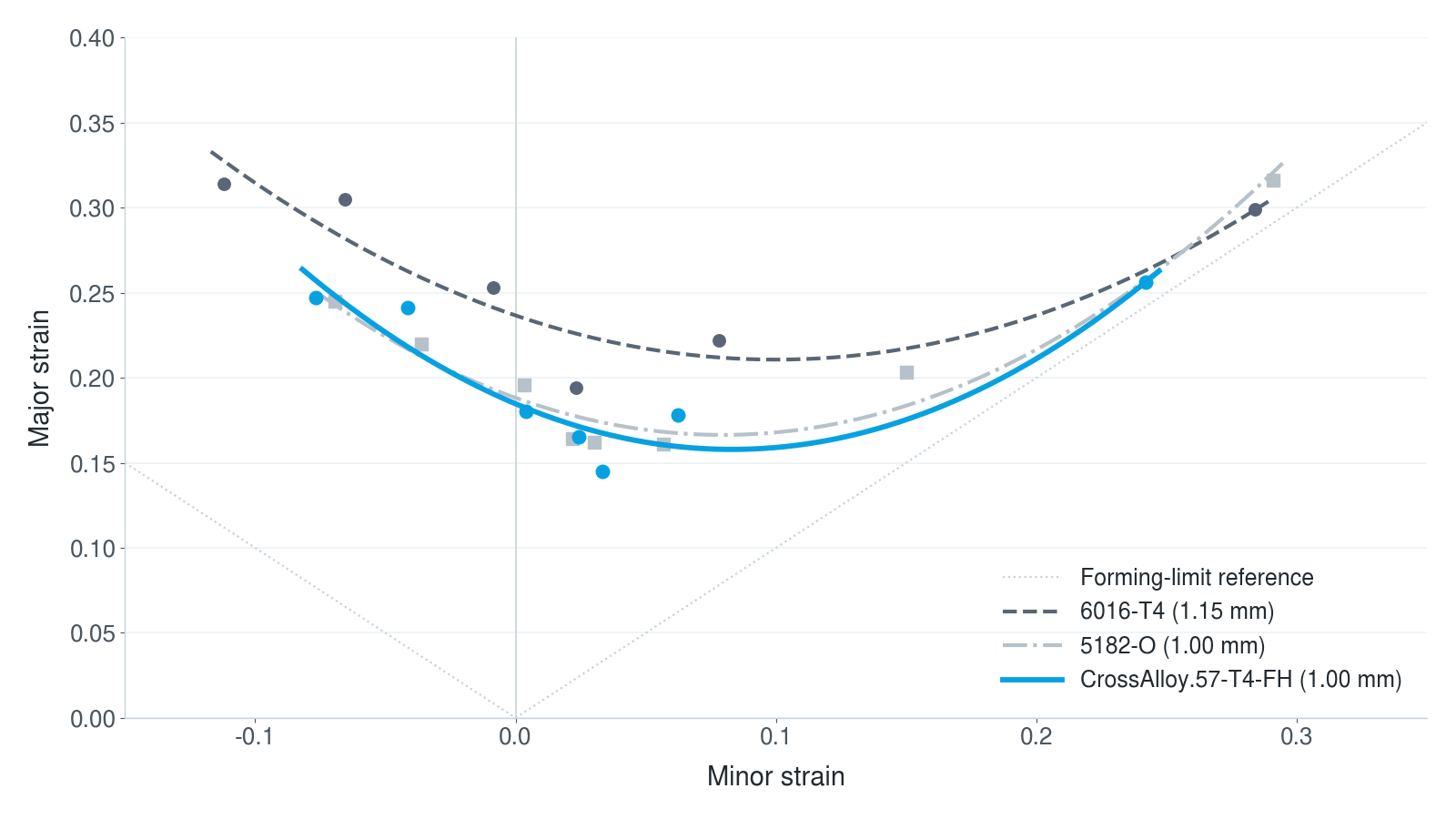
Forming-limit curve (T4-FH): CrossAlloy.57 (1.0 mm) vs. 5182-O and 6016-T4 reference sheet.
Corrosion
Over a vehicle lifetime body-in-white parts are frequently exposed to a corrosive environment containing road-salt and moisture. In the bake-hardened in-service condition, CrossAlloy.57 shows low intergranular attack and passes the SCC test:
| Condition | ASTM G67 (NAMLT) | ASTM G110 (IGC acc. 2xxx/7xxx) | ASTM G44/G47 (SCC) |
|---|---|---|---|
| T64 | < 15 mg/cm³ | < 100 µm | > 480 h |
High-temperature blow forming requires a fine, thermally stable grain and is best suited to the most complex, deep and stylistically demanding structures that cold forming cannot reach. CrossAlloy.57 lets a single blow-formed part replace an assembly of stamped-and-welded components, and does so at a strength level well beyond conventional superplastic grades.
The advantage: SPF
- Complex shapes, fewer parts : A single blow-formed part replaces an assembly of stamped-and-welded components.
- 7xxx-equivalent strength after forming : Optimized heat treatment reaches Rp0.2 up to 390 MPa, unusual for a superplastically formed part.
- Validated weight savings : Crush simulations confirm double-digit weight reduction vs. incumbent alloys.
Mechanical Behavior
SPF trades cycle time for shape complexity, but conventional SPF grades are weak. CrossAlloy.57 reaches Rp0.2 up to 370 MPa in SPF T64 condition and thereby clearly outperforms the SPF-standard 5083 (~145 MPa). An optimized heat treatment (SPF T6) can boost the strength even up to 390 MPa.
Typical values are shown below; establishing customer specifications is feasible upon request.
Strip / sheet 1.0 – < 3.2 mm
| Property | T4-FH1) | SPF T642) | SPF T63) |
|---|---|---|---|
| Rp0.2 (MPa) | 260–310 | 330–370 | 360–390 |
| Rm (MPa) | 430–470 | 440–470 | 470–500 |
| A (%) | 18–23 | 11–14 | 10–13 |
1) FH: Pre-treated after solutionizing and quenching to ensure optimal grain structure, limited natural aging and fast hardening during subsequent aging
2) Corresponds to a representative in-service condition upon forming, adhesive curing and OEM-specific paint-bake cycle.
3) Corresponds to a strength-optimized heat-treatment scheme subsequent to forming and quenching.
Reference alloys in the field for comparison:
| Property | 5083 (O/H111) |
|---|---|
| Rp0.2 min (MPa) | 125 |
| Rm min (MPa) | 275 |
| A min (%) | 12–13 |
Minimum values according to EN 485-2, aggregated over the thickness span shown for CrossAlloy.57.
Formability
The fine, thermally stable grain structure gives superplastic elongation, so large, deep and stylistically complex structures that cold forming cannot reach become feasible.
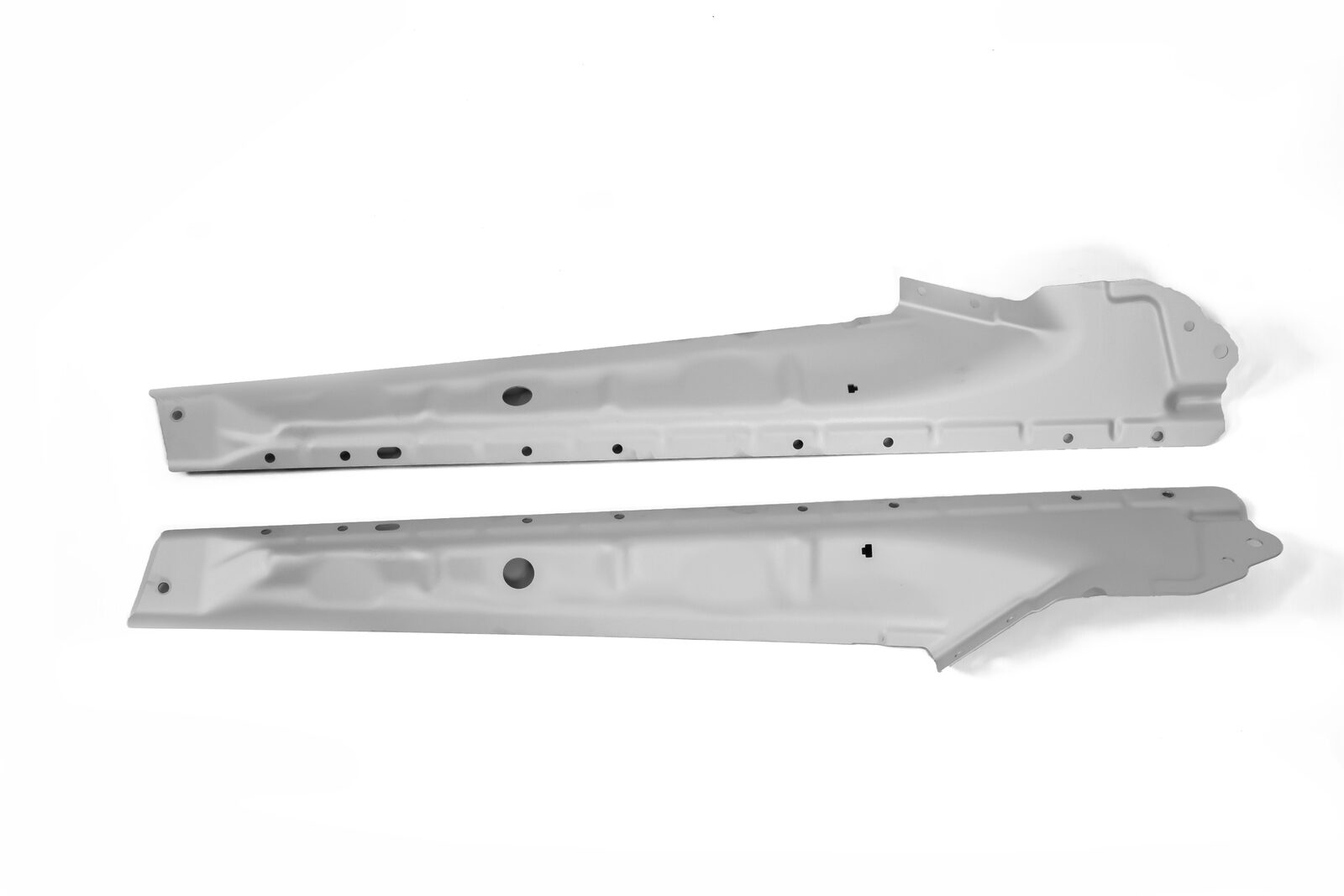
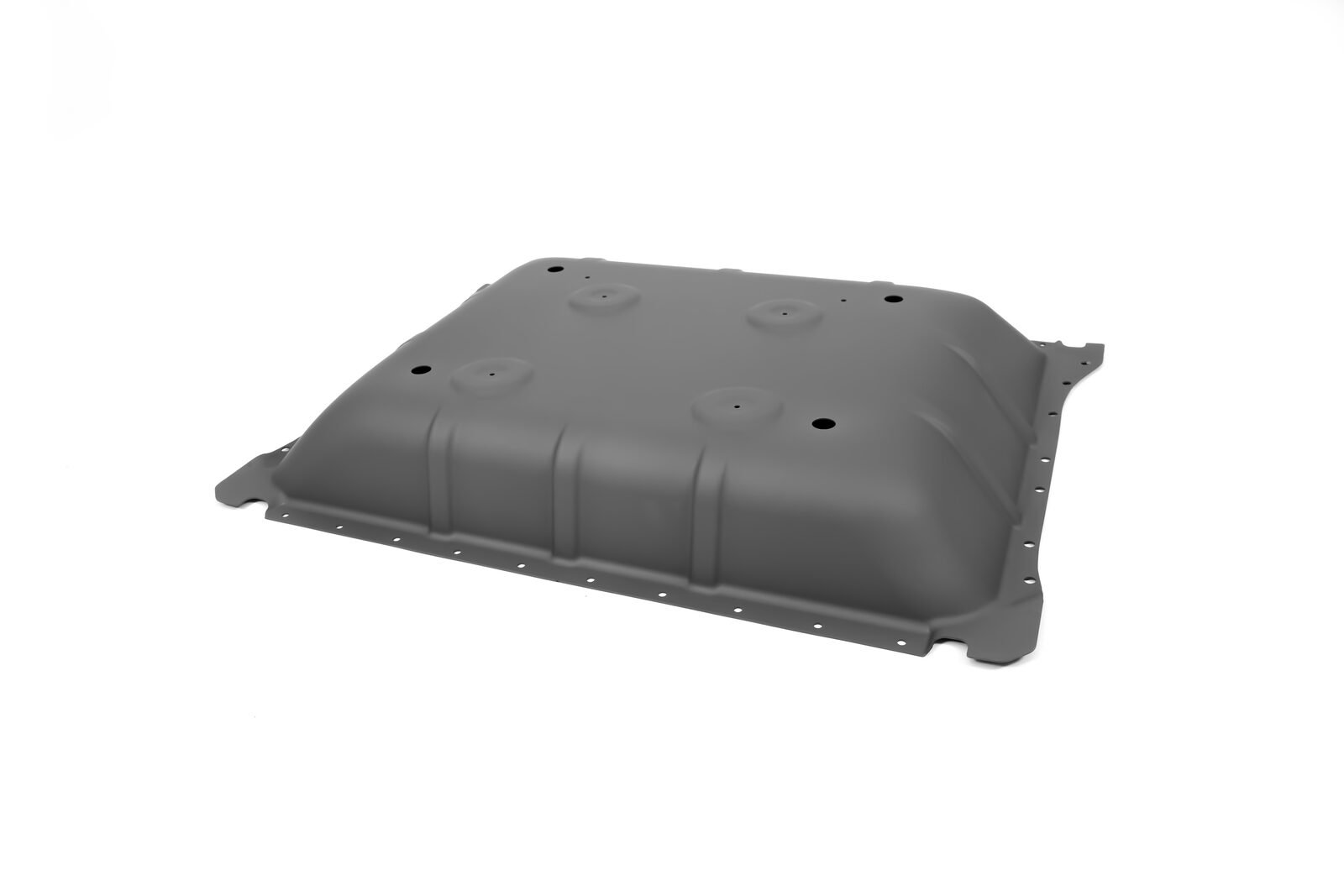
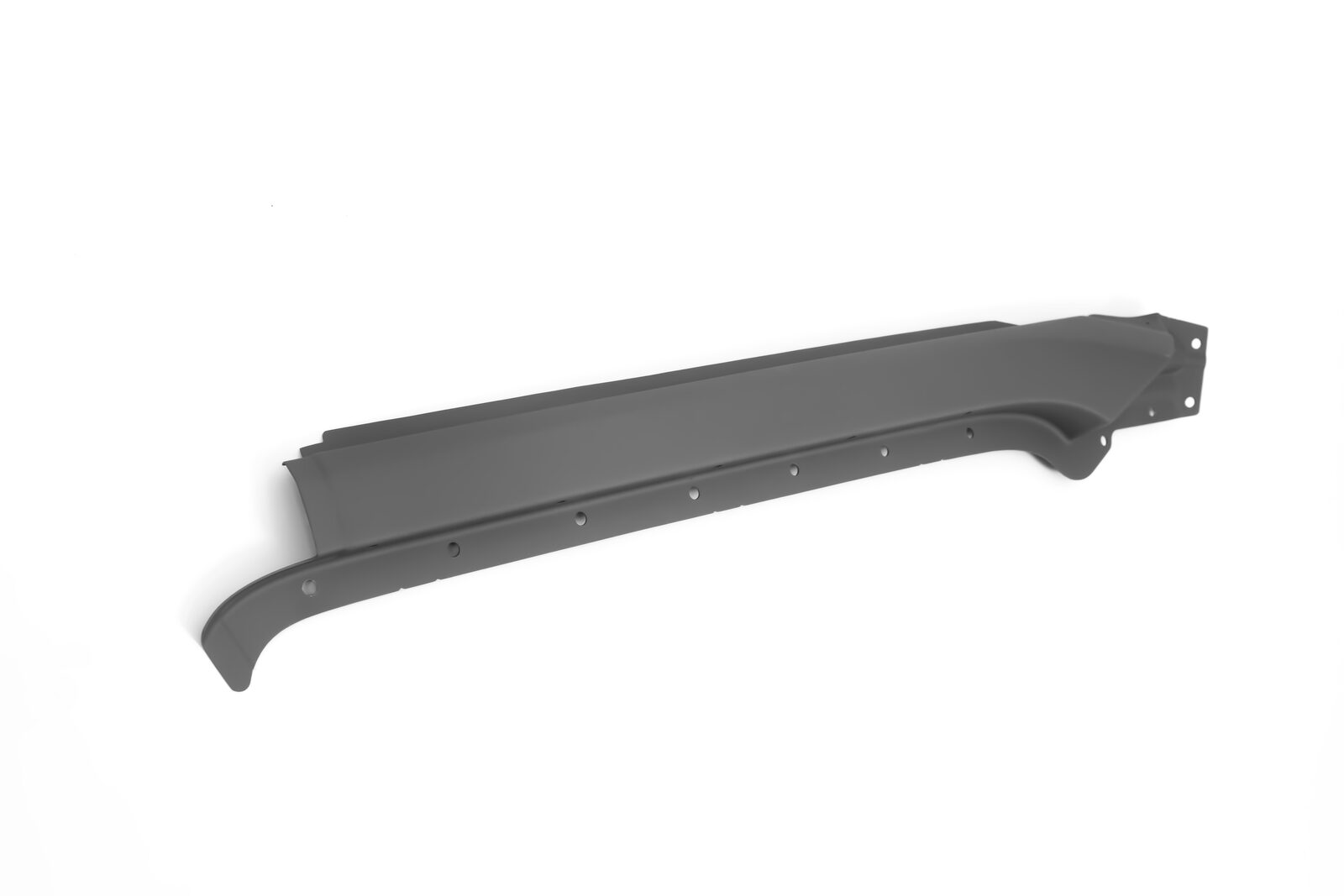
Forming simulation
Feasibility studies and crush simulations were conducted by our partners for realistic body structures. Input data corresponds to the SPF T64 condition, thus indicating further improvement for the SPF T6 condition.
| Study / part | Weight reduction | vs. incumbent |
|---|---|---|
| Longitudinal quasi-static crush simulation on door structure | −16 % (−1.28 kg/vehicle) | Blow-formed 7020-T5 components |
| Part integration for A-/C-pillar reinforcement | −14 % (−1.5 kg/vehicle) | Multiple, cold-formed 6111-T6 components |
Corrosion
The superplastically formed conditions match the corrosion behavior of the cold-formed material: low intergranular attack and passed SCC tests in both the representative in-service condition (SPF T64) and the strength-optimized SPF T6:
| Condition | ASTM G67 (NAMLT) | ASTM G110 (IGC acc. 2xxx/7xxx) | ASTM G44/G47 (SCC) |
|---|---|---|---|
| SPF T64 | < 15 mg/cm³ | < 100 µm | > 480 h |
| SPF T6 | < 15 mg/cm³ | < 100 µm | > 480 h |
Hot forming with an in-die quench and subsequent aging. It is best suited to high-strength crash and load-path structures that must be deep-drawn in a single shot. CrossAlloy.57 combines complex, deep geometry with the highest in-service strength of the three routes, while staying weldable and corrosion-resistant.
The advantage: HFQ
- High-strength crash structures : In-service HFQ T64 reaches Rp0.2 up to 400 MPa for demanding load paths.
- Robust, well-behaved forming : Simulation shows < 20 % thinning, stable across a wide temperature window.
- Weldable and corrosion-resistant : IGC and SCC performance confirmed for the balanced and paint-bake-optimized conditions.
Mechanical Behavior
HFQ forms hot and quenches in the die, then hardens on aging. The strength-optimized in-service condition HFQ T6 (Rp0.2 up to 380 MPa) clearly exceeds the 6xxx alloys typically hot-formed today such as 6082-T6 (~260 MPa), while remaining weldable and corrosion-resistant. Tuning the whole heat-treatment scheme to the subsequent OEM-specific paint-bake cycle raises Rp0.2 to up to 400 MPa (HFQ T64).
Typical values are shown below; establishing customer specifications is feasible upon request.
Strip / sheet 1.0 – < 3.2 mm
| Property | T4-FH1) | HFQ T612) | HFQ T63) | HFQ T644) |
|---|---|---|---|---|
| Rp0.2 (MPa) | 260–310 | 310–340 | 350–380 | 370–400 |
| Rm (MPa) | 430–470 | 430–460 | 450–470 | 450–480 |
| A (%) | 18–23 | 11–13 | 9–11 | 13–16 |
1) FH: Pre-treated after solutionizing and quenching to ensure optimal grain structure, limited natural aging and fast hardening during subsequent aging
2) Corresponds to a heat-treatment condition designed to balance strength and corrosion resistance.
3) Corresponds to a heat-treatment condition designed for maximum strength.
4) Corresponds to a heat-treatment condition exploiting the subsequent OEM-specific paint-bake cycle to establish an optimized in-service property profile, requires validation for deviating heat treatment parameters.
Reference alloys in the field for comparison:
| Property | 6082 (T6) | 6061 (T6) |
|---|---|---|
| Rp0.2 min (MPa) | 260 | 240 |
| Rm min (MPa) | 310 | 290 |
| A min (%) | 6–7 | 6–7 |
Minimum values according to EN 485-2, aggregated over the thickness span shown for CrossAlloy.57.
Forming simulation
CrossAlloy.57 sheets for HFQ forming were systematically assessed by a third party and a forming material card was created; simulation results were found to be consistent with experimental forming trials. Compared with AA6082-T6, CrossAlloy.57 in T4-FH condition forms very well in simulation with reduced thinning and thickening, so the route is well suited to complex structural parts.
| Aspect | Result |
|---|---|
| AutoForm material card for hot form simulation | Available for CrossAlloy.57-T4-FH (2.5 mm) |
| Thinning / thickening | < 20 % (typical threshold), stable across 300–440 °C |
| Comparison with 6082 | Reduced thinning/thickening; most suitable for complex structural parts |
Corrosion
As with the mechanical behavior, corrosion resistance of HFQ-formed parts depends on the processing and heat-treatment parameters: the balanced HFQ T61 and the paint-bake-optimized HFQ T64 pass the SCC test, while the maximum-strength HFQ T6 trades SCC life for strength:
| Condition | ASTM G110 (IGC acc. 2xxx/7xxx) | ASTM G44/G47 (SCC) |
|---|---|---|
| HFQ T61 | < 100 µm | > 400 h1) |
| HFQ T6 | < 100 µm | < 200 h |
| HFQ T64 | < 100 µm | > 480 h2) |
1) Majority of specimens passed 480 h; premature failure was also observed in a minor number of specimens.
2) Requires validation for deviating heat treatment parameters.
Joining
Body structures are multi-material assemblies, so weldability, riveting and bonding all matter. CrossAlloy.57 behaves much like 5xxx alloys for spot welding and bonds better than common auto sheet. Joining results are indicative and require validation for specific use cases:
| Process | Result | Note |
|---|---|---|
| Resistance spot welding (RSW) | successfully tested | parameter range similar to 5xxx-series but optimization recommended |
| Laser welding | > 5,000 N shear force | 40 mm seam length; minimal expulsion/pores |
| Self-pierce riveting (SPR) | ~7,500 N shear force (2-layer bond) ~7,300 N shear force (3-layer bond) |
assessed by Tier 1, specification requirements confirmed |
| Adhesive bonding | +20 % vs. 6016 & 5182 | > 80 % residual strength after 360–500 h neutral salt spray |
Physical Properties
| Property | min–max | mean |
|---|---|---|
| Density ρ (g/cm³) | 2.71–2.72 | 2.71 |
| Young's modulus E (GPa) | 70.3–73.0 | 71.7 |
| Shear modulus G (GPa) | 26.3–27.5 | 26.6 |
Available Dimensions
| Thickness | Max. width (mm) | Max. length (mm) |
|---|---|---|
| 1.0–2.0 mm | ||
| T4-FH | 1650 | 4000 |
| 2.0–3.0 mm | ||
| T4-FH | 2000 | 10000 |
Conservative assessment based on prototype production and limited number of lots. Additional dimensions available upon request.